Augmenting Human Intellect: From Engelbart to AI-Powered Engineering
How AI is reshaping the way engineers think and work
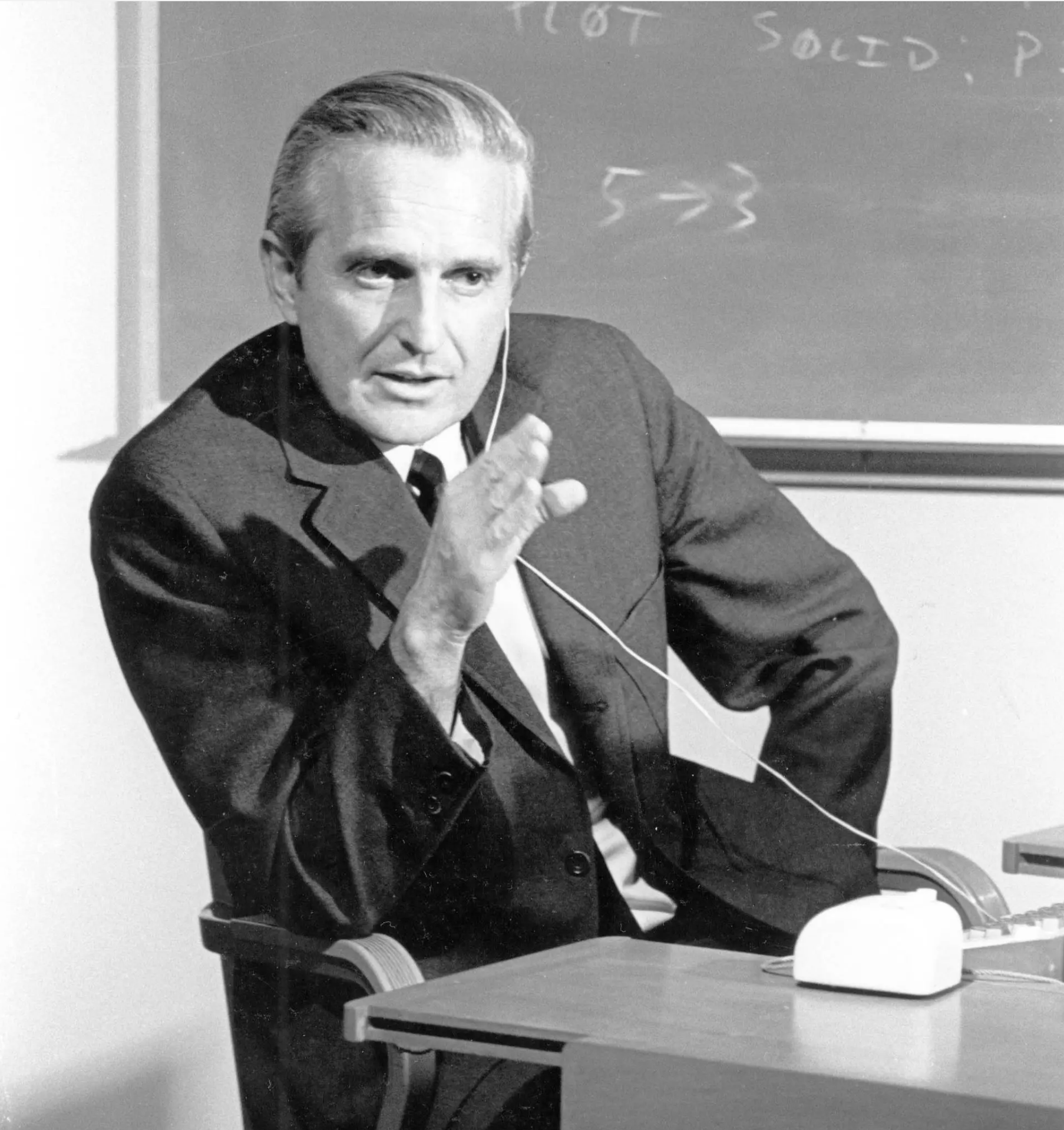
In 1962, Douglas Engelbart published a groundbreaking paper, Augmenting Human Intellect: A Conceptual Framework. In it, he laid out a vision for how technology could extend human cognitive abilities, allowing us to tackle more complex problems with greater efficiency. He didn’t just predict the rise of computers as tools — he foresaw how they would change the way we think.
Today, Engelbart’s ideas are more relevant than ever, especially for engineers working in software development, system maintenance, and debugging. AI is not just an assistant but a collaborator, redefining workflows, problem-solving strategies, and even the nature of engineering itself.
Let’s explore Engelbart’s core ideas and how they translate into the AI-powered engineering world of today.
Engelbart’s Vision: The H-LAM/T System
Engelbart introduced the concept of the H-LAM/T system — a model describing how humans use tools to enhance their cognitive abilities. It consists of:
- H (Human) – The individual, with their cognitive skills, intuition, and problem-solving abilities.
- L (Language) – Symbols, terminology, and ways of structuring thought.
- A (Artifacts) – Tools, from writing instruments to computers.
- M (Methodology) – Techniques, processes, and best practices.
- T (Training) – The acquired skills necessary to use these tools effectively.
His key insight was that improving any one of these components changes the entire system. When new tools emerge — whether it’s the printing press, the personal computer, or AI-powered assistants — they don’t just make tasks easier; they fundamentally reshape how humans think and solve problems.
For engineers, this is especially crucial. Our work revolves around managing complexity, debugging intricate systems, and continuously refining codebases. How does AI fit into this framework? Let’s find out.
AI as the New Augmentation Tool for Engineers
Engelbart’s framework suggests that when tools change, so do the language, methodologies, and training associated with them. AI isn’t just another efficiency booster; it’s an intellectual amplifier, much like Engelbart envisioned computers would be.
How AI Changes Engineering Workflows
1. Debugging & Troubleshooting
- Before AI: Engineers manually scan logs, replicate issues, and hypothesize root causes — often a slow, tedious process.
- With AI: AI-powered debugging tools analyze logs, identify anomalies, and suggest likely root causes. Assistants like ChatGPT or Copilot can even propose fixes in real time.
2. Maintenance & Code Health
- Before AI: Engineers tracked technical debt manually, relying on intuition and peer reviews.
- With AI: AI monitors code quality, flags inefficiencies, and suggests refactoring opportunities.
3. Refactoring & Optimization
- Before AI: Engineers needed deep system knowledge to refactor code, balancing efficiency and maintainability.
- With AI: AI suggests optimized code structures, modularization, and performance enhancements.
These changes aren’t just about automation; they shift the engineer’s role from manual problem-solving to high-level decision-making.
AI as a Thinking System: The “Clerk” Model
In Engelbart’s vision, tools don’t just assist — they change how we interact with knowledge. AI functions as a clerk: a system that processes, organizes, and analyzes vast amounts of information.
However, AI thinks differently than humans:
AI strengths
- Pattern Recognition – Detects inefficiencies and errors in code.
- Automation – Handles repetitive debugging and optimization tasks.
- High-Speed Search & Recall – Surfaces past solutions and best practices.
AI limitations
- Lacks Conceptual Understanding – Doesn’t “think” like a human; lacks deep reasoning.
- Dependent on Training Data – Can make incorrect inferences if the data is biased or incomplete.
Thus, engineers must learn to collaborate with AI effectively, leveraging its strengths while applying human intuition and oversight.
The Engineer + AI Collaboration Model
To work efficiently with AI, engineers should adopt a new mindset:
1. Engineer as the Architect, AI as the Builder
- The engineer defines goals and constraints.
- AI assists by handling repetitive and pattern-based tasks.
2. Engineer as the Critical Thinker, AI as the Clerk
- AI retrieves and organizes information, but the engineer validates its reasoning.
- Engineers must develop strong prompts to extract useful insights.
3. Engineer as the Curator, AI as the Draftsman
- AI can generate code, documentation, and reports, but the engineer reviews and refines.
- The best engineers will develop intuition for when AI is wrong.
The Future: A New H-LAM/T for Engineers
AI is reshaping all aspects of Engelbart’s framework:
- Language changes – “Prompt engineering” and AI-assisted development become standard.
- Artifacts evolve – IDEs integrate AI-driven refactoring, debugging, and testing.
- Methodologies shift – Engineers move from writing raw code to guiding AI-driven development.
- Training is redefined – AI literacy becomes a required skill for all engineers.
Ultimately, engineers who master AI collaboration will outperform those who resist it. AI isn’t replacing engineers — it’s redefining engineering itself.
Final Thoughts: Testing This in the Real World
As an engineer, I find this shift fascinating. The next step is to test these ideas in real engineering workflows. How can we refine our collaboration with AI? Where does AI fall short? And most importantly — what does it take to become the most effective AI-augmented engineer?
Engelbart’s vision was never just about computers; it was about extending human intellect. Today, AI is taking that vision even further. It’s time for us, as engineers, to explore its full potential.